
The Ford Alcantara and Carbon Fiber Cleaning Guide
A workshop routine for a Ford rim in Alcantara and carbon fiber: brush, damp wipe, blot and dry, plus the cleaners that quietly ruin a pile or a satin clear coat.
Read More →Guide · 10/17/2026
How to measure a Ford steering wheel at home: the three figures we need, where to place the tape, and the photographs that settle the fitment check before an order.
A tape measure settles most Ford fitment questions before an order is placed. Two figures from your own truck tell us more than a dozen photographs, and the work takes about ten minutes on a driveway.
The numbers also travel well. A photograph can look identical to another car and a figure cannot. Getting them right the first time saves a shipping cycle in both directions.
The figures also protect you. A rim cut to the wrong diameter cannot be adjusted later. A cover built for the wrong grip thickness never feels right in the hand.
Ford has built several rim sizes across the Mustang, the F-150 and the Focus. The badge says little about which one sits in your car today.
A previous keeper may also have fitted a wheel from another trim. That is why we ask for numbers from the vehicle in front of you rather than from a specification table.
The model tells us which frame family to expect, and the figures confirm it. The table below covers the vehicles owners bring to us most often.
| Vehicle | Typical wheel | What owners measure first |
|---|---|---|
| Mustang | Three-spoke rim with a thicker grip | Outside diameter |
| F-150 and Raptor | Larger rim, often used with gloves | Diameter, then thickness |
| Focus and other cars | Smaller rim with a tighter spoke layout | Diameter and flat span |
| Bronco | Trim dependent, with frame differences by year | Diameter, with a rear photograph |
Three measurements cover nearly every build we make. The table below sets out each one and what it decides. A Ford how to measure a steering wheel question usually starts with the diameter.
| Figure | Where the tape goes | What it decides |
|---|---|---|
| Outside diameter | Across the wheel, through the centre, edge to edge | Which core size we cut |
| Rim thickness | Around the grip at nine o'clock | How much padding the cover carries |
| Flat span | Along the straight lower section, where fitted | Where the seam sits on a flat-bottom rim |
Owners who search Ford how to measure a steering wheel usually want the diameter first. The diameter is the easiest to take, and it settles most of the conversation.
The kit is small, and a kitchen drawer usually covers it. The list below is what we recommend.
Lay the tape across the wheel so it passes through the centre. Read the distance from the outside edge on one side to the outside edge on the other.
Take the reading a second time with the tape turned a quarter turn. A round wheel reads the same both ways, and a wheel that does not may be sitting slightly off centre.
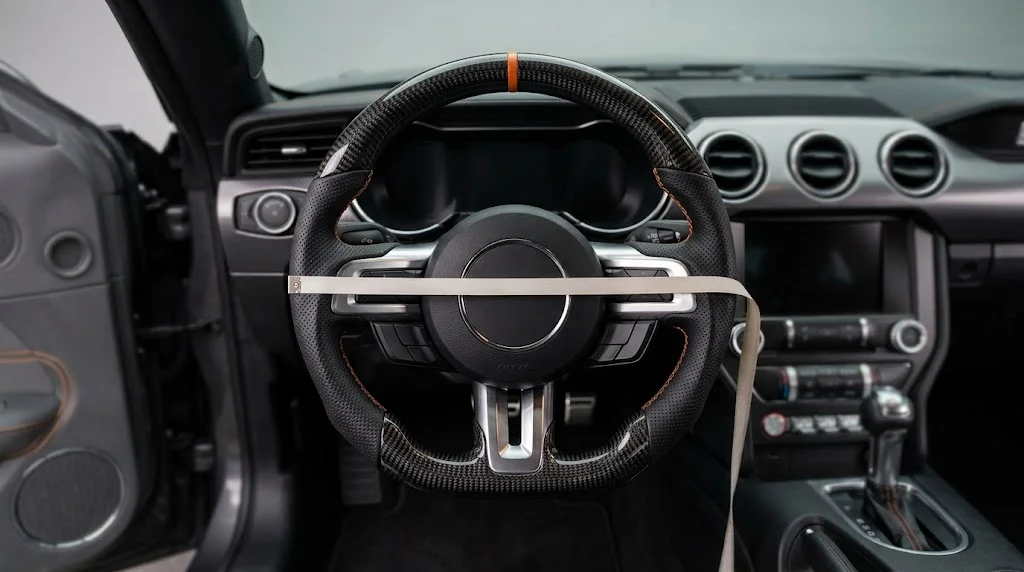
The photograph above shows the line the tape should follow. It crosses the rim rather than running along it.
Thickness is harder to read because the tape has to bend around a curve. Wrap a strip of masking tape around the nine o'clock grip and mark where the ends meet. Lay the strip flat and measure between the marks.
On a flat-bottom rim, measure the straight lower section from the first bend to the second. That span tells us where to place the seam and how closely to follow the original shape.
The Ford how to measure a steering wheel figures work as a set rather than on their own. A diameter without a thickness leaves the cover under-padded or over-padded, and both problems show up in the hand.
If two figures disagree with the photographs, we will ask for a second look. The second look costs less than a second rim.
A wheel on a bench is easier to measure and far easier to photograph. The list below covers the order we suggest.
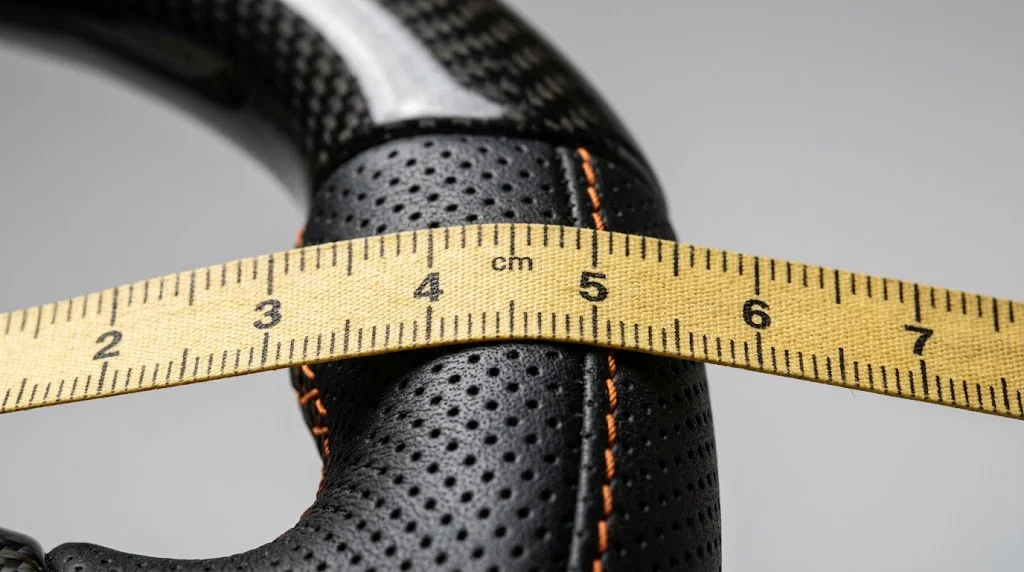
The close-up shows where the thickness reading begins and ends. Both marks should sit on the rim wall rather than on the stitching.
The numbers settle size, and they say nothing about the parts behind the airbag. The button frame, the connector shape and the space for the module all decide whether a build fits.
Photographs cover that gap. A clear shot of the rear of the wheel, taken with the airbag out, answers more than another measurement.
Four items let us confirm a build before anything is cut. Start with the model and year, read from the vehicle rather than the paperwork. Then add a photograph of the wheel face and one of the rear with the airbag out. Tell us whether the truck has paddles, a heated rim, or a lane-keeping button on the spoke.
Have these ready before you write to us:
Most returns trace back to a small number of habits. None of them take long to avoid.
A wheel that has worn through its grip has already answered the fitment question. The figures then serve the build rather than a repair.
Where the leather is only shiny rather than damaged, a re-trim may still be the cheaper route. Send the photographs and we will say which path makes sense. A wheel that has covered high mileage usually needs a new cover rather than another clean.
Where the factory module, the wiring and the vehicle specific parts are reused, further coding may not be needed. The rim changes and the electronics carry on as before.
A truck that gains a function it never had is the other case. The control unit may then need to learn what is present, and a workshop visit becomes likely. Coding is a possible step rather than a certainty, and your vehicle decides the answer.
Three issues come up most often on Ford builds. A wheel from another year carries the same badge and a different button frame. A heated rim ordered for a truck that never had one leaves a spare plug behind the airbag. The reverse case appears just as often.
Driver assistance hardware is the fourth issue. Trucks with hands-on detection carry sensing parts inside the factory rim, and those parts have to be reused or matched. Mention the assistance pack with your photographs and we will allow for it.
For diameter and thickness, yes. The tape reads the outside of the rim, so the airbag plays no part in either figure.
The outside diameter. It decides the core we cut, and the other figures refine the cover afterwards.
Share both with a photograph of the wheel face. A small difference is normal, and a larger one tells us the rim sits off centre.
Only for a rebuild. If you would rather keep driving, we build on a new core and your original stays with you.
A cloth tape is best, because it follows the curve. A steel tape works for the flat span and the spoke face.
Yes, and the rear photograph matters more in that case. A used wheel may come from another trim, so we check the frame before anything is cut.
Ten to fifteen working days in production, then fifteen to twenty days for shipping. Expect twenty-five to thirty-five days from order to delivery.
Our workshop in Guangzhou is factory-direct, and no rim is cut until your order arrives. Thirteen or more years of design, engineering and precision manufacturing sit behind the patterns we hold. Every build is checked against your figures before the first cut.
Material, stitch and shape stay your decisions. Orders ship tracked worldwide with a three-year warranty and thirty days for returns via an RMA request. The measuring questions that follow are answered by the same team.
Two guides answer what owners ask after the tape goes away. The flat bottom versus round comparison explains how shape changes the feel. The Ford material guide weighs carbon against Alcantara and leather.
The full range sits in the shop, and the Ford pages are Ford fitment, the Mustang listing and the Bronco listing.
Write the three figures on a sheet of paper, add the two photographs and the option list, and send the set through the inquiry form. Anyone searching Ford how to measure a steering wheel will find the same three figures on this page. We will confirm the build from there.
The catalogue holds two entries for the vehicles owners measure most often. The first is the Mustang wheel listed for the 2015 to 2023 cars. The second is the flat bottom wheel for the Focus with a carbon and Alcantara finish. Both are cut to the figures you send us.
For background reading, the installation guide covers the battery and airbag sequence, and the FAQ collects the questions owners raise most. The about page describes the workshop, and fitment or delivery questions can go to the contact page. Lead times sit in the shipping policy, and returns are covered by the return and refund policy. The Magnuson-Moss Warranty Act sets the federal minimum standards, and the Code of Federal Regulations carries the related warranty rules.
A workshop routine for a Ford rim in Alcantara and carbon fiber: brush, damp wipe, blot and dry, plus the cleaners that quietly ruin a pile or a satin clear coat.
Read More →How a paddle shifter upgrade works on an automatic Ford: paddle types, the wiring behind the wheel, fitment checks and what to test once the wheel is back on.
Read More →How a flat bottom and a round rim differ on a Ford: which shape suits an F-150, Raptor, Mustang, Focus or Bronco, and what each one changes at the wheel.
Read More →