
The Ford Alcantara and Carbon Fiber Cleaning Guide
A workshop routine for a Ford rim in Alcantara and carbon fiber: brush, damp wipe, blot and dry, plus the cleaners that quietly ruin a pile or a satin clear coat.
Read More →Guide · 10/9/2026
How a heated steering wheel retrofit works on a Ford Mustang, F-150, Raptor, Focus or Bronco: what the upgrade adds, fitment checks and heater testing.
Winter mornings expose the same weakness in every Ford. The seats warm up, the screen thaws, and the rim stays cold for the first ten minutes. A Ford heated steering wheel retrofit moves that warmth to the part your hands hold first, and it leaves the rest of the interior alone.
The job is more than a cover swap. Heat has to reach the grip evenly. The feed has to come from a circuit that can carry it. The airbag and the switches have to go back exactly as they came out, which is why the specification matters more than the finish.
Heat arrives through the grip sections at nine and three. Those are the places where bare hands rest in cold weather. The top and bottom of the rim stay cooler by design, because palms rarely sit there for long.
A retrofit also changes how the truck gets used. Drivers who keep gloves on for the first few miles tend to take them off sooner. It brings back the feel of the wheel through a jacket sleeve.
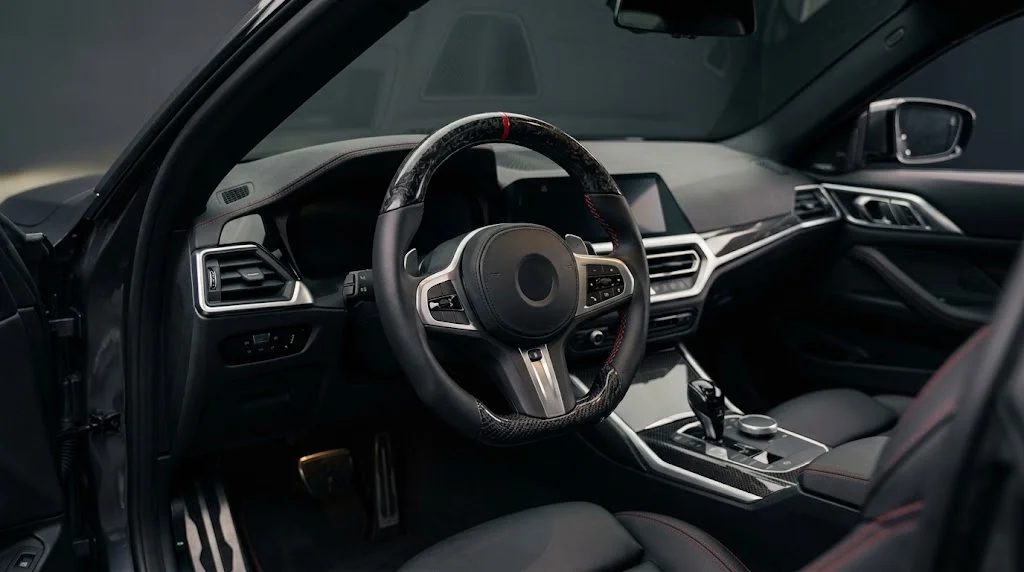
The wheel above shows the finished look in a Mustang cabin. The heating element sits out of sight, under the leather.
Most modern Fords can carry a Ford heated steering wheel retrofit, but the wiring behind the airbag decides how much work is involved. Find your row below, then let us confirm the detail from photographs of your own vehicle.
| Model | Typical position | What to confirm |
|---|---|---|
| Mustang | Often fitted at the factory on higher trims | Whether a heated rim is already present, and the button frame |
| F-150 and Raptor | Common on later trucks, less so on older ones | Feed circuit, switch position and airbag connector |
| Focus and other cars | Rarely fitted at the factory | Whether the loom can support a heater without extra work |
| Bronco | Trim dependent | Confirm before ordering, because frames differ by year |
A truck that already has a heated rim is the easier case. The feed and the switch are already in place. The harder case is a car built without one, where the circuit has to be checked before we agree to a build.
The element is laid behind the leather, under a thin matting layer that spreads the warmth. It follows the two grip sections rather than the full circumference. The rim then avoids feeling artificially warm under the palms on a long drive.
Cover thickness affects how quickly the heat is noticed. A thicker leather takes longer to warm through, which is why we ask about the finish before the element goes in.
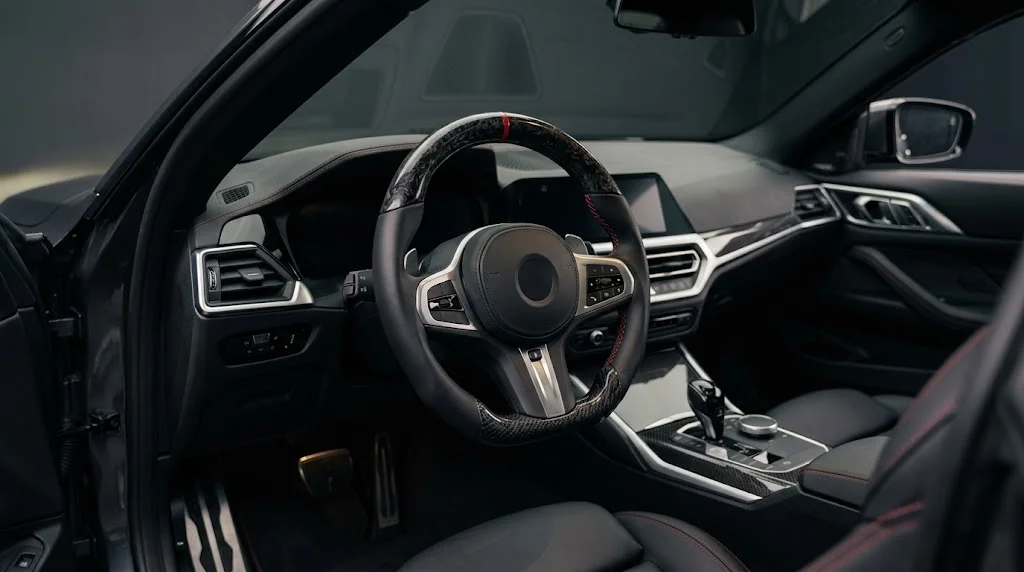
The close-up shows the grip section that carries the element. The switch stays plain, with no symbol we would have to invent.
On a truck that came with a heated rim, the retrofit reuses the existing feed and switch. Nothing new is added, and the truck behaves as it did before.
A vehicle without the option needs a different approach. The feed has to come from a circuit rated for the load. The switch has to live somewhere sensible as well. We describe that work as a possible step, because it depends on your truck rather than the finish you choose.
Not every surface suits a heating element. The list below covers what we use most often on Ford rims.
Leather remains the practical choice for a daily truck. Carbon adds contrast on the parts your hands touch least, and that split keeps the heating even.
Owners who park outside notice the difference before anyone else. A rim holds the cold longer than a seat does, because the metal frame behind it takes time to lose its chill.
Work trucks have their own reason. A driver who starts before dawn spends the first part of the route with gloves on. This is why owners in cold states raise the subject of a Ford heated steering wheel retrofit before they ask about anything else.
Four items answer almost every question. Start with the model year and the full option list. Then add a daylight photograph of the wheel face, and one of the rear with the airbag out.
Have these ready before you write to us:
Those images show us the button frame, the connector shape and the space behind the airbag. Tell us whether the truck has a heated rim today, and whether it carries paddles or a lane-keeping button on the spoke. We cut nothing until the match is confirmed, and a second photograph is cheaper than a second rim.
Warmth should not cost you a working switch. The build reuses the frame and the loom already fitted to your Ford.
| Function | Typical outcome |
|---|---|
| Airbag | Original module reused; the cover is built to suit it |
| Multifunction buttons | Retained when the original frame goes back on |
| Paddle shifters | Kept on cars that have them, with cut-outs made at order |
| Heated rim | Added or retained, depending on what the truck left the factory with |
| Driver assistance | Depends on the sensing hardware inside the original rim |
The heating mat and any sensing parts sit behind the rim, so each needs its own photograph. Neither can be judged from the front of the wheel.
Rebuilding your own wheel keeps the electronics exactly as Ford assembled them. The frame, the loom and the paddles all stay standard. That is the safer route when a heater is being added to a newer truck.
A newly made core is the other option. Your factory wheel stays in the garage, which suits a leased vehicle that has to return to standard. With an older F-150, used wheels are common enough that a donor core usually costs less.
An airbag sits at the centre of this job, so give the work to someone qualified. Isolate the battery and let the truck power down fully before a fastener is loosened. Follow the Ford procedure for your chassis rather than a general guide found online.
Set the module down on something soft and away from the work area. Tighten the centre fastener to the figure in the workshop manual for your truck, and treat that number as the only source. Afterwards, drive a short distance and confirm the rim sits centred.
Test every switch, the paddles if fitted, and the horn. A warning lamp that stays lit means the vehicle should be read before you drive further.
Warranty questions follow any change of this kind. An aftermarket steering wheel does not automatically void a vehicle warranty under U.S. federal warranty law, but warranty coverage can still depend on whether the modification caused the specific failure being claimed.
Where the factory module, the wiring and the vehicle specific parts are reused, further coding may not be needed. The rim changes and the electronics carry on as before.
A truck that gains a function it never had is the other case. The control unit may then need to learn what is present, and a workshop visit becomes likely. Coding is a possible step rather than a certainty, and the answer depends on your vehicle.
The model year with photographs of both units tells us what to expect before anything is made. and we will say what to expect before the build starts.
Most problems trace back to one of three causes. A wheel from another year often carries the same badge but a different button frame. A heated rim fitted to a truck that never had one leaves a plug with nothing to connect to. The reverse case appears just as often.
Driver assistance hardware is the third cause. Trucks with hands-on detection carry sensing parts inside the factory rim, and those parts have to be reused or matched. Mention the assistance pack with your photographs and we will allow for it.
The heater should reach full warmth within a couple of minutes on a cold morning, and it should feel even on both grips. A patch that stays cold points to a connector that was not seated fully.
Check the switch as well. Confirm that the heater turns off with the ignition. If the rim warms unevenly, or the switch does nothing, have the circuit checked before the next long drive.
Many can, but the wiring decides the work involved. Send the model year with photographs and we will confirm before anything is cut.
No. The element sits behind a matting layer, so the surface looks the same as an unheated rim.
Only for a rebuild. A new core leaves your factory wheel with you, which suits a truck that has to go back to standard.
For cars that have them, yes. Tell us which type is fitted and we will confirm compatibility before the build.
Ten to fifteen working days in production, then fifteen to twenty days for shipping. Expect twenty-five to thirty-five days from order to delivery.
It can, because a thicker cover warms more slowly. Leather is the usual choice on the grips, with carbon kept to the sections your palms rarely rest on.
The workshop in Guangzhou is factory-direct. Each rim is cut, stitched and assembled there after your order arrives. Thirteen or more years of design, engineering and precision manufacturing sit behind the patterns we hold. Every build is checked against your chassis before the first cut.
Material, stitch and shape stay your decisions. Orders ship tracked worldwide with a three-year warranty and thirty days for returns via an RMA request. The team that answers your questions is the team that makes the wheel.
Two other guides answer the questions owners ask next. The Ford material guide weighs carbon against Alcantara and leather on a truck rim. The gloss versus matte comparison covers how the two carbon finishes age.
The full range sits in the shop, and the Ford pages are Ford fitment, the Mustang listing and the Focus listing.
Start with the vehicle you drive, and say whether it has a heated rim today. Add the model year, the option list and the two photographs, and we will reply with a confirmed build and a date.
Two catalogue entries suit the vehicles owners bring to us most often. The first is the Mustang wheel listed for the 2015 to 2023 cars. The second is the carbon wheel for the Raptor, F-150 and F-350. Both are built to the specification we agree with you before work starts on your Ford heated steering wheel retrofit.
For background reading, the installation guide covers the battery and airbag sequence, and the FAQ collects the questions owners raise most. The about page describes the workshop, and fitment or delivery questions can go to the contact page. Lead times are listed in the shipping policy, and returns fall under the return and refund policy. The Magnuson-Moss Warranty Act sets the federal minimum standards, and NHTSA covers air bag safety. Questions about the retrofit itself can go through the inquiry form.
A workshop routine for a Ford rim in Alcantara and carbon fiber: brush, damp wipe, blot and dry, plus the cleaners that quietly ruin a pile or a satin clear coat.
Read More →How a paddle shifter upgrade works on an automatic Ford: paddle types, the wiring behind the wheel, fitment checks and what to test once the wheel is back on.
Read More →How to measure a Ford steering wheel at home: the three figures we need, where to place the tape, and the photographs that settle the fitment check before an order.
Read More →